

Along the N2 highway between Sezela and Port Shepstone on KwaZulu-Natal’s South Coast, it is now not unusual to see the behemoths of South Africa’s roads hauling sugarcane to nearby sugar mills.
With their flashing lights in front, red “Abnormal load” signs emblazoned across their tail gates and bumpers, and the telltale logos of what are better known as Performance-based Standards (PBS) or Smart Trucks, these 67.5 ton monsters of the road are now taking the sugarcane transport sector to new efficiencies according to one of the largest private agriculture sector hauliers on the south coast, Alan Date.
Date Farms Transport is an agricultural sector haulier company delivering cane from growers on the lower south coast to both the Sezela and Umzimkulu Mills.
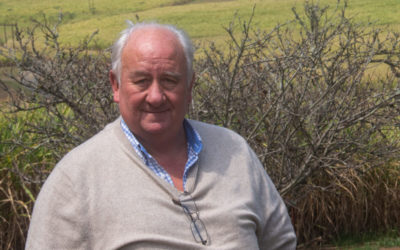
Date, who grew up and still farms sugarcane and Macadamia nuts in the Port Shepstone district, said a decision to be one of the first to introduce the abnormal sized trucks to his 44-vehicle fleet has resulted in cost savings of between 6% and 10% on each load delivered to the sugar mill.
Over the next three months the company will take delivery of another five replacement trucks taking the total to 12 abnormal vehicles in its fleet.
“I really don’t want the business to get any bigger now,” he said. “Our operation runs 24 hours a day, 7 days a week with an active operations control room. The only day I am not in my office at 5.30am until 6 pm is a Sunday. I am totally hands on and a control freak. If the company gets any bigger I will start to lose touch and that’s exactly what I don’t want to happen.”
In the off-season the trucks are used to move timber, lime, fertilisers and macadamia nuts to assist in reducing off season financial overheads.
“We mainly work in the agriculture sector and if we want to remain competitive we have to provide cost cutting opportunities to growers as well as finding ways all the time to improve the efficiency of our deliveries to the mills. That is the main reason I decided to introduce the abnormal load trucks into our fleet,” Date said.
RIGOROUS SAFETY LEGISLATION DRIVES SMART TRUCKS
Keeping abreast of technological developments in the transport sector has meant purpose buying of trucks based on their proposed routes and what applications they are best suited for.
Once the truck design combination is identified, it is then tested by the CSIR and, if the assessments are approved and have met the legislated safety standards, the combination is then submitted to the Department of Transport for final concept approval.
“Road Transport Management System (RTMS) accreditation is compulsory for Smart Trucks and can take anything up to a year. It is costly, but I believe it is critically important that everything must be 150% in line with legislation and the RTMS standards. The Department of Transport is prescriptive on the routes that these trucks can use based on the CSIR assessments. The Department of Transport has access to our tracking systems to make sure we are compliant at all times. Our drivers also participate in refresher training courses each year. Our number one priority is road safety,” Date said.
First introduced into the timber industry some years ago, the trucks have 8 axles as opposed to the usual 7, our trucks are 23.8m in length against the norm of 22 meters and are able to carry potentially 44 tons compared with the everyday sugarcane truck that carries between 30 and 33 tons of cane in a load.
PURPOSE BUILT TRUCKS IMPROVE EFFICIENCIES
Once fully loaded, the trucks can reach 67.5 tons in gross weight. Depending on cane supply, Date Farms Transport can deliver up to 3 000 tons of sugarcane to the mills each day.
“Our PBS trucks are either supplied by MAN or Volvo. We take into consideration the performance of the trucks in specific conditions and we buy accordingly. “That is how we have improved on our efficiency,” he said.
Sakhi Thutshini, one of the top drivers in the company who mans one of the R2.6 million trucks, said while he loved the comfort and high-tech features of the vehicles he was on high alert when in the driver’s seat. “I am thinking about the extra length I am pulling all the time. When I am turning corners I am very cautious,” he said.
GROWERS CALL FOR SMART TRUCKS
Date said growers were now starting to ask for the PBS trucks specifically. “Yes, I get calls from the growers now asking me to send the ‘big ones’, because they are fully aware of the cost savings”.
Growers on the routes who have embraced the abnormal combinations are able to achieve the higher payloads have benefited through lower transport costs resulting in increased profits.
Date said the success of his operation was based on a combination of sound and economic transport solutions backed by a supportive staff compliment focused on seeing to it that clients were at the receiving end of the service they deserved for their valuable support.

RELATED ARTICLES:

Another relief for the agriculture sector after a 50 basis points cut in the repo rate
21 May 2020 A combination of favourable crude oil price outlook, lower local inflation with risks to the downside, and economic contraction afforded the South African Reserve Bank (SARB) room to cut the repurchase rate by another 50 basis points. This brought the...
Serving the sugar industry with distinction
Commercial sugarcane farmer Tim Murray has a family tree rich with mathematicians, engineers and a Scottish provost, to boot, and since the 2019 South African Sugar Technologists’ Conference, he can add to the list his achievement as an award-winning farmer who has...

TIPS FROM A MINNESOTA FARMER ON GROWING HEMP
4/15/2020 In a time when there seems to be little good news in agriculture, hemp is offering hope for Leigh Barry. While the Minnesota grower’s vision for growing hemp on his traditional corn, soybean, and alfalfa operation began about three years ago, 2019 marked his...

